UpNano, a leader in 2 Photon Polymerization (2PP) 3D printing technology, has raised €7 million in a Series A funding. round to further enhance its innovations and scale global distribution. Backed by investors such as aws Gründungsfonds, NovaCapital, IGO Innovation GmbH, and ILUM Tec, UpNano is positioned to expand its facilities in Europe and the US, grow its workforce, and continue its technological innovations in medicine, bioprinting, and photonics. But what exactly is 2 Photon Polymerization, and why is it exciting in applications?
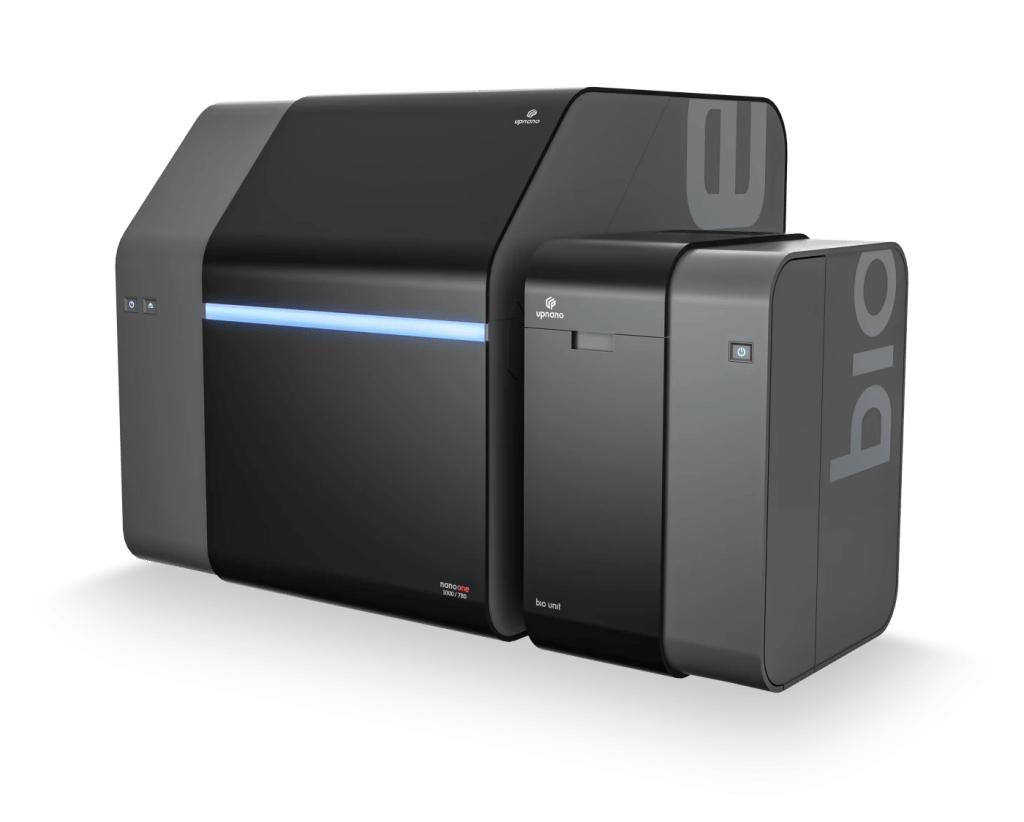
Fig 1. NanoOne – 2PP platform technology
What is 2 Photon Polymerization?
2 Photon Polymerization (2PP) is a high-resolution 3D printing technology that utilizes the interaction of two photons to solidify material at a precise focal point. Unlike traditional 3D printing methods, which involve layer-by-layer material deposition, 2PP uses a laser to initiate polymerization within a photosensitive material. This results in the creation of structures with resolutions down to the nanoscale.
What makes 2PP unique is its ability to produce highly intricate, delicate, and functional microstructures with a level of detail that other technologies struggle to match. The combination of extreme precision, rapid printing speeds, and versatility opens new possibilities in multiple fields.
UpNano’s flagship NanoOne printer series leverages the power of 2PP, allowing users to print objects ranging from centimeter to micrometer scale. Recent technological advancements, such as the introduction of high-power lasers and smart stitching algorithms, have made this process even faster and more reliable. This makes 2PP a contender for producing detailed medical components like microneedles, springs, and other functional parts used in medical devices and potentially bioprinting applications.
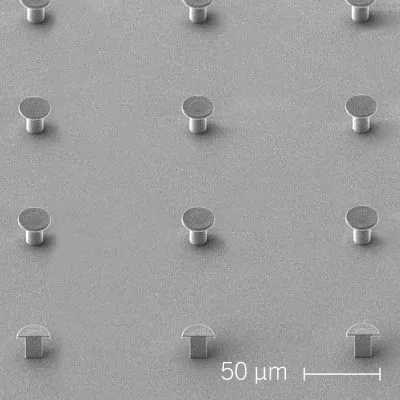
Fig 2. NanoOne – 2PP sample print
Bioprinting with 2 Photon Polymerization
Bioprinting is one of the most exciting applications of 2PP technology, and UpNano is at the forefront of applying 2PP to bioprinting. In 2021, UpNano introduced the NanoOne Bio 3D bioprinting system, which enables the printing of tissue structures at both nano- and mesoscales with living cells embedded within.
Pharmaceutical companies and research institutions have the potential to print highly detailed tissue structures, which could be important for studying disease mechanisms and testing drug efficacy. By improving the accuracy of cell models, UpNano’s bioprinting technology has the potential to develop new interesting physiological output expressions from cell behavior.
While the cost of a unit might be high, those who have access can develop applications in microfluidics and medical devices, fields that require precise 3D structures. For instance, organ-on-chip devices can be used to mimic biological environments.
Broader Applications of 2PP Technology in Medicine
Beyond UpNano’s advancements, 2 Photon Polymerization (2PP) is unlocking a host of new possibilities in the medical field. Researchers at the University of Birmingham and the University of Southern Queensland have demonstrated the potential of 2PP in developing polymeric microneedles for drug delivery and biomarker monitoring. By fine-tuning factors such as laser power, print speed, and slicing distances, they created microneedles with side channels that allow for precise drug administration and health monitoring through the skin. In tests conducted on pig cadavers, shorter microneedles (150µm) withstood higher loads and successfully penetrated the skin without causing cytotoxicity or inflammation, indicating strong potential for safe and effective human applications.
In addition to microneedles, 2PP technology is paving the way for innovations in microactuators and drug delivery systems. Researchers from the University of Grenoble have developed a novel method that uses deformable magnetic fields to create highly complex microstructures. By integrating magnetic microbeads into the 2PP process, they were able to produce nanoscale tweezers that can be controlled by external magnetic fields. This approach enables precise manipulation of 3D printed objects, potentially leading to advanced drug delivery mechanisms or even soft robotics for minimally invasive medical procedures. The technique’s versatility was demonstrated by printing a nanoscale 3D model of a Millennium Falcon, showcasing the precision and functionality of the method.
These breakthroughs underscore how 2PP and 3D printing are transforming the medical field, enabling the creation of highly specialized tools and devices. From microneedles for targeted drug delivery to nanoscale actuators for complex surgical procedures.
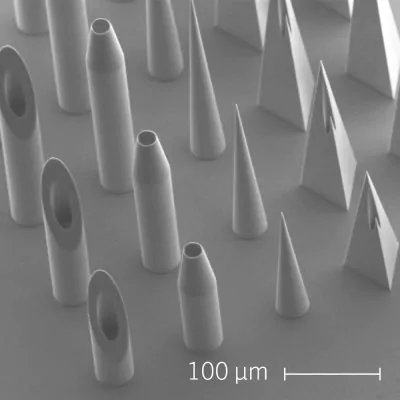
Fig 3. NanoOne – 2PP needles print
About UpNano
Founded as a spin-off from the Technical University of Vienna, UpNano specializes in high-performance 2 Photon Polymerization (2PP) 3D printing systems. Its NanoOne printer series has gained recognition across multiple industries, including medicine, electronics, and photonics, for its ability to print complex structures with exceptional precision and speed. UpNano’s mission is to continually push the boundaries of what’s possible with 3D printing by advancing their technology and expanding its global reach.
About IGO Innovation
IGO Innovation, based in Innsbruck, Austria, is the investment arm of IGO Industries, an internationally active and highly specialized group of technology companies, leading in the fields of technical building equipment and industrial plant construction.
About NovaCapital
NovaCapital is an Italian holding company controlled by Merloni Holding. It invests in innovative B2B companies in Italy, Europe, and the USA, placing a strong emphasis on relationships with entrepreneurs, innovation, and business growth. In venture capital, NovaCapital specifically targets verticals like energy transition, new materials, circular economy, industrial automation, and B2B SaaS.
About aws Gründungsfonds
The aws Gründungsfonds is an Austrian venture capital fund with a fund volume of about EUR 70 million. As investor, they support startups from their initial growth phase through subsequent financing rounds (Series A/B) up to their exit. They see themselves as a long-term, stable partner with a hands-on approach, actively working alongside founding teams as a sparring partner. Since 2013, their predecessor fund and in collaboration with national and international co-investors, they have invested more than EUR 500 million in over 45 investments and have successfully achieved numerous exits.



 The Business of Biofabrication
Leave a comment