RESEARCH
LATEST




FULL LIST
-

Instant Collagen, Real-Time Biofabrication: What TRACE Means for the Lab & the Market
Nature Materials has just published a paper that’s turning heads across the biofabrication community. Gong et al. describe TRACE – Tunable Rapid Assembly of Collagenous Elements, a macromolecular-crowding approach that lets unmodified type I collagen gel in seconds while staying pH-neutral and fully bioactive. The article racked up 9,899 views, an Altmetric score of 39,…
-

CollPlant Expands U.S. Footprint with Strategic Hire to Lead Commercial GrowthBusiness of Biofabrication
CollPlant Biotechnologies (NASDAQ: CLGN), a leader in recombinant human collagen (rhCollagen) innovation, has appointed Bowman Bagley as Vice President, Commercial North America. The newly created position underscores CollPlant’s growing commitment to scaling its regenerative medicine and bioprinting platforms across the U.S. and Canadian markets. Leadership with Deep Roots in Biomaterials Bagley, an experienced executive in…
-

Tides Medical and UToledo Health Pioneer 3D Bioprinted Grafts for Chronic Wound Care
UToledo Health has become one of the first healthcare systems in the U.S. to implement 3D bioprinted grafts derived from a patient’s own fat cells in the treatment of chronic wounds. The approach marks a major advancement in regenerative medicine, offering a personalized solution for patients with wounds that have resisted conventional healing methods. A…
-

Stanford Accelerates Vascular Modeling for Organ Bioprinting
New algorithm offers scalable design pathway for patient-specific blood vessel networks Addressing a Core Challenge in Biofabricated Organs Stanford researchers have introduced a computational tool that could remove a major roadblock in organ bioprinting: the creation of functional, patient-specific vascular networks. Their new platform, published in Science on June 12, 2025, enables the rapid design…
-
Vital3D Targets Pet Care Market as Strategic Entry Point to Bioprinted Human Organs
Commercial Focus Begins with Veterinary Wound Care Lithuanian startup Vital3D is positioning itself at the forefront of bioprinted organ development, with a projected timeline of 10 to 15 years for human applications. As a first step toward that goal, the company is entering the market with VitalHeal, a 3D-bioprinted wound patch for pets — beginning…
-
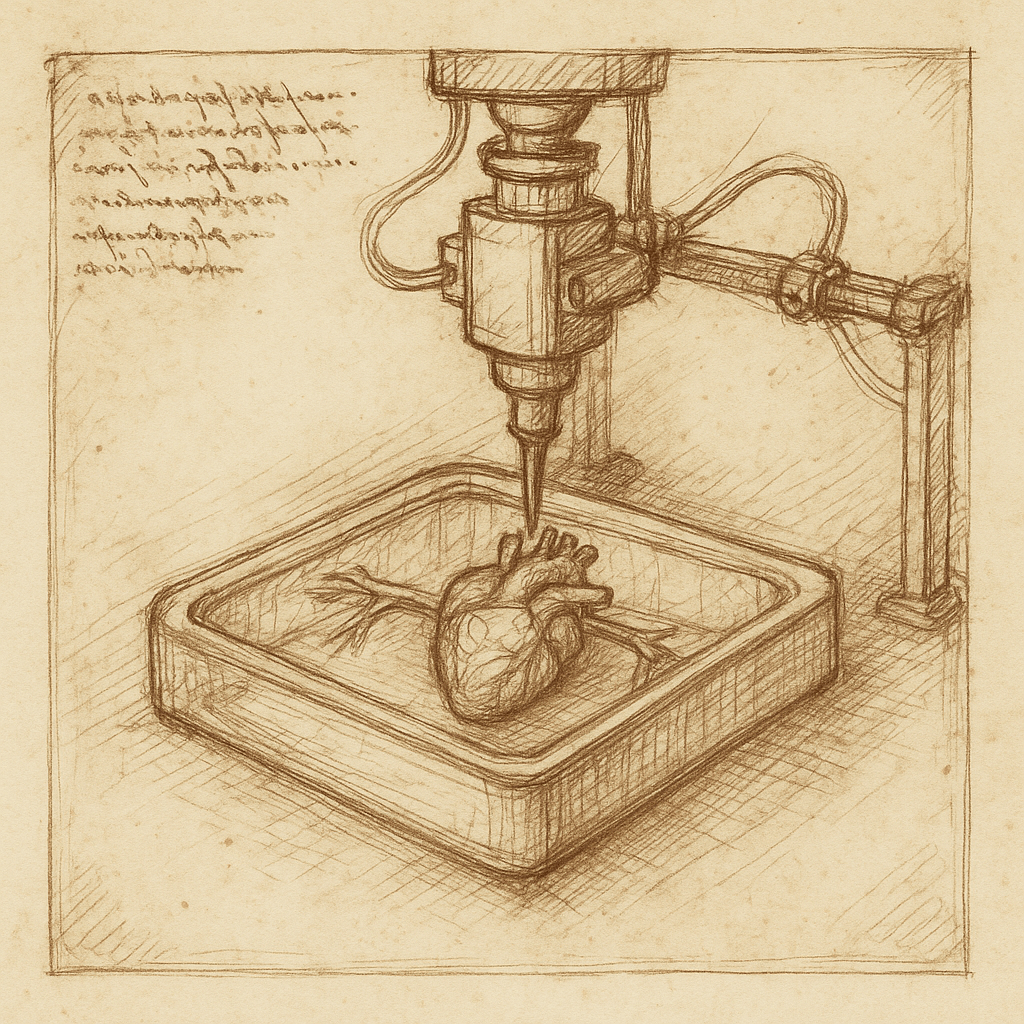
Collagen-Based 3D Bioprinting Offers Fully Perfusable Gel Based Organ-On-Chips
A team of bioengineers at Carnegie Mellon University has unveiled a new tissue engineering platform. The study, published in Science Advances, introduces CHIPS (Collagen-based High-resolution Internally Perfusable Scaffolds), a new class of biological, perfusable 3D-printed tissue constructs, and VAPOR, a customizable perfusion bioreactor designed to support them. What’s the Technology? The platform uses an improved…
-

Quris Technologies Demonstrates Liver-Driven Brain Toxicity in New Multi-Organ Model
A recent study by Quris Technologies highlights how drug metabolism in the liver can significantly alter a compound’s neurotoxicity, providing new insights into limitations of traditional drug testing methods. Published in Biomedicine & Pharmacotherapy, the findings suggest a greater role for multi-organ, human-relevant testing platforms in preclinical development. Using a proprietary platform called BioAI, Quris…
-

Xylyx Bio Secures $1.125 Million to Advance Innovations in Xenogeneic Cross-Circulation Transplant Organs
Xylyx Bio, Inc., a regenerative medicine company, today announced that it has received $1,000,000 from the Richard M. Bartlett Jr. Memorial Foundation and an additional $125,000 from the Ilene Beal Foundation and Margaret Stewart Lindsay Foundation. These funds will accelerate the translational development of Xylyx’s groundbreaking bioengineered human lung grafts, which aim to drastically increase…
-

EU-Funded micro2MACRO Project Aims to Push Cartilage Tissue Regeneration with Bioprinting
Teltow, February 5, 2025 – A new European initiative is set to push the boundaries of tissue regeneration and bioprinting. The micro2MACRO (m2M) project, launched in December 2024, is an EU-funded effort that aims to develop a cutting-edge bioprinting platform capable of generating personalized tissue grafts for medical applications. The project brings together leading academic…
-

Auxilium Biotechnologies Achieves Bioprinting Milestone Aboard the ISS
Auxilium Biotechnologies successfully deployed its 3D bioprinter aboard the International Space Station (ISS). This achievement marks the an instance of implantable medical devices being printed in space, paving further way for advanced medical solutions both on Earth and in future space missions. Printing Medical Devices in Microgravity Auxilium Biotechnologies has successfully 3D bioprinted perfusable vasculature,…
Subscribe
Enter your email below to receive updates.
 The Business of Biofabrication