RESEARCH
LATEST



FULL LIST
-
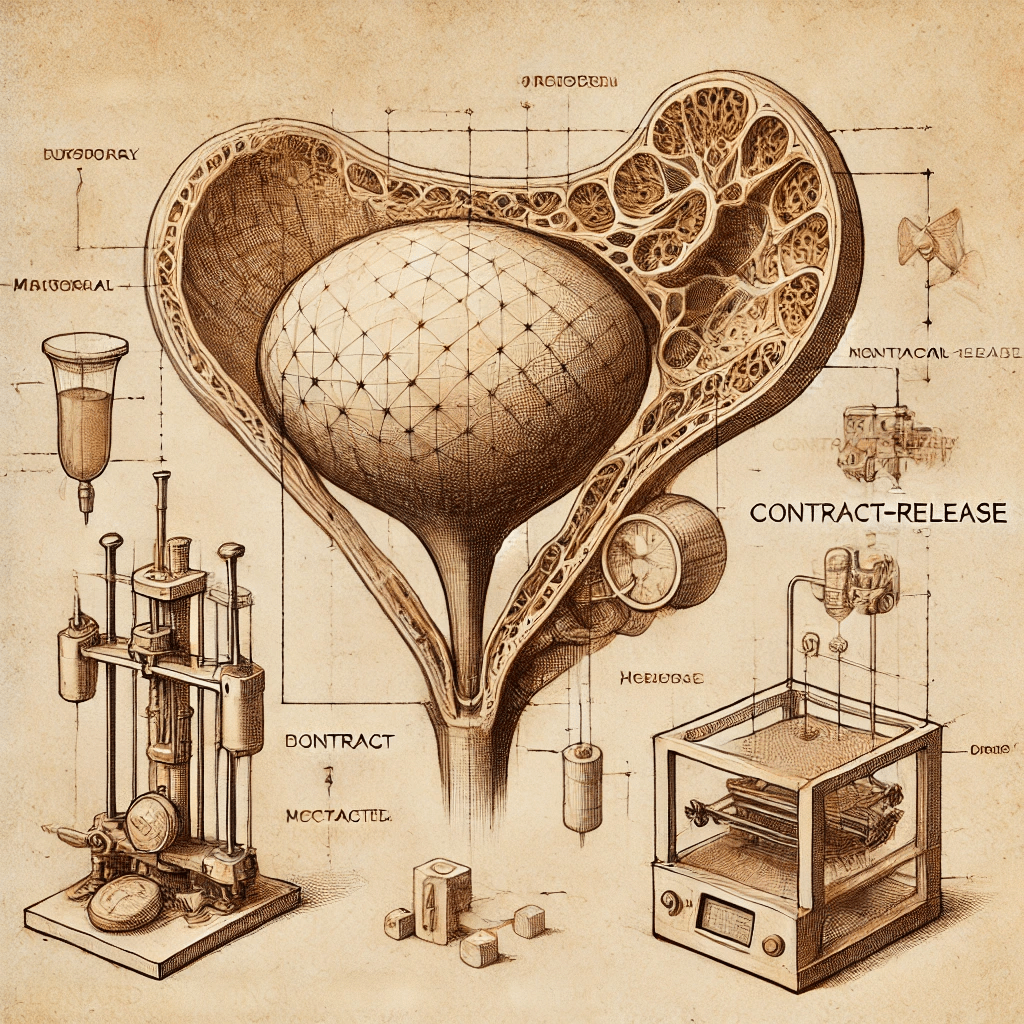
POSTECH 3D Bioprinting of a Biomimetic Urinary Bladder Model
Bladder dysfunction can cause significant medical issues, including urinary incontinence and renal failure, yet the ability to accurately model and treat such problems has long been limited by the lack of realistic bladder models. Traditional in vitro (lab-based) models often fail to replicate the complex functions and structures of the human bladder. This gap in…
-

Bioprinted Blood Vessels Offer New Approach into Brain Tumor Treatment
Researchers have developed bioprinted blood vessels using human cells to better understand and treat aggressive brain tumors like glioblastoma. This approach aims to replicate the brain’s vascular networks more accurately, providing a better platform for studying tumor behavior and testing therapies. Fig: llustrating the Assembly of a 3D-bioprinted System. Credit: Advanced Healthcare Materials (2024). DOI: 10.1002/adhm.202401876 Challenges…
-

xolo Partners with Rousselot to Enhance Volumetric Bioprinting with X-Pure GelMA
German 3D printing innovator xolo has entered into a co-branding agreement with Rousselot, a leading collagen and gelatin brand under Darling Ingredients. This collaboration aims to integrate Rousselot’s X-Pure Gelatin Methacrylate (GelMA) solution into xolo’s bioinks for volumetric 3D printers, potentially bridging the gap between research and clinical applications in bioprinting. By combining xolo’s Xolography…
-

Xolo Unveils Xube²: Newest Xolography 3D Bioprinter
Berlin-based company Xolo has announced the launch of its latest 3D printer, the Xube², utilizing their proprietary xolography technology. Building on the success of its predecessor, the Xube² promises to set new standards in the field of xolography additive manufacturing, offering unprecedented speed and precision. What is Xolography? Xolography is an innovative 3D printing technology…
-

Further Research on 3D-Bioprinted Mini-Tumors At LACDR
Researchers at the Leiden Academic Centre for Drug Research(LACDR) have continued to test their models to enhance the testing and development of cancer immunotherapies. Using 3D bioprinting technology, they create mini-tumors in a collagen gel that closely mimics human tissue. This method allows them to observe real-time interactions between these mini-tumors and immune cells, providing…
-

3D Bioprinting with Borate Bioactive Glass and Sodium Alginate
A recent study published in Science Direct highlights a new idea of integrating borate bioactive glass (BBG) with sodium alginate (SA) to enhances both printing precision and biocompatibility. This development has potential value for the creation of complex biological structures, including bone and soft tissue implants. Figure taken directly from publication. Sodium alginate, a natural…
-

Egg White-Based Hydrogels as an Alternative Bioink
The study, published in Advanced Functional Materials recently done by the Terasaki Institute for Biomedical Innovation, demonstrates the potential of Egg White Methacryloyl (EWMA) hydrogels as a versatile and highly functional bioink for 3D bioprinting. Why Egg Whites? Egg whites (EW) are rich in proteins like ovalbumin, ovotransferrin, and lysozyme, which provide excellent biocompatibility, bioactivity,…
-

Dr. Josephine Wu’s OPTO-BIOPRINTING Project
Dr. Josephine Wu, a researcher at Trinity College Dublin, is making noise in the field of tissue engineering with her innovative project, OPTO-BIOPRINTING. Supported by an €800,000 Wellcome Early Career Award, Dr. Wu aims to develop a novel approach to creating living tissues. OPTO-BIOPRINTING seeks to overcome current challenges in tissue engineering by leveraging the…
-

Co-Axial SWIFT – Embedding Biomimetic Vascular Networks with Co-axial Sacrificial Writing into Functional Tissue Introduction
Introduction Bioprinting human tissues and organs that include biomimetic vascular networks is becoming increasingly essential in the field of regenerative medicine. The major challenge lies in creating perfusable channels within cellular and acellular matrices that mirror the complex structures of native blood vessels. A recent study by Stankey et al., published in Advanced Materials, introduces…
-

WFIRM publishes Science Translation Paper on Full-Thickness Bioprinted Skin
New milestone reached in bioprinting with the successful creation of full-thickness human skin, as detailed in a recent study published in Science Translational Medicine. Researchers from the Wake Forest Institute for Regenerative Medicine (WFIRM) have developed a bioprinted skin graft that mimics the complexity and functionality of natural human skin, offering new hope for improved…
Subscribe
Enter your email below to receive updates.

