PERSPECTIVES
LATEST
FULL LIST
-
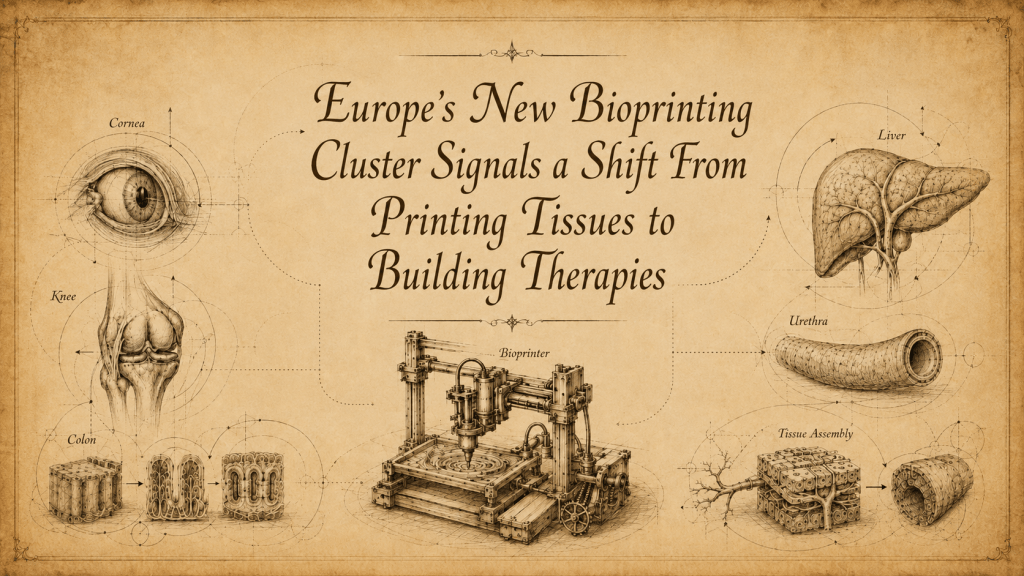
Europe’s New Bioprinting Cluster Signals a Shift From Printing Tissues to Building Therapies
Six Horizon Europe projects are collaborating across corneal, colorectal, liver, orthopedic and urological regeneration. Their work reveals how biofabrication is moving beyond standalone printers toward complete clinical manufacturing systems. Europe has quietly assembled one of the most ambitious coordinated investments in regenerative bioprinting to date. The newly established European Bioprinting Cluster brings together six Horizon…
-
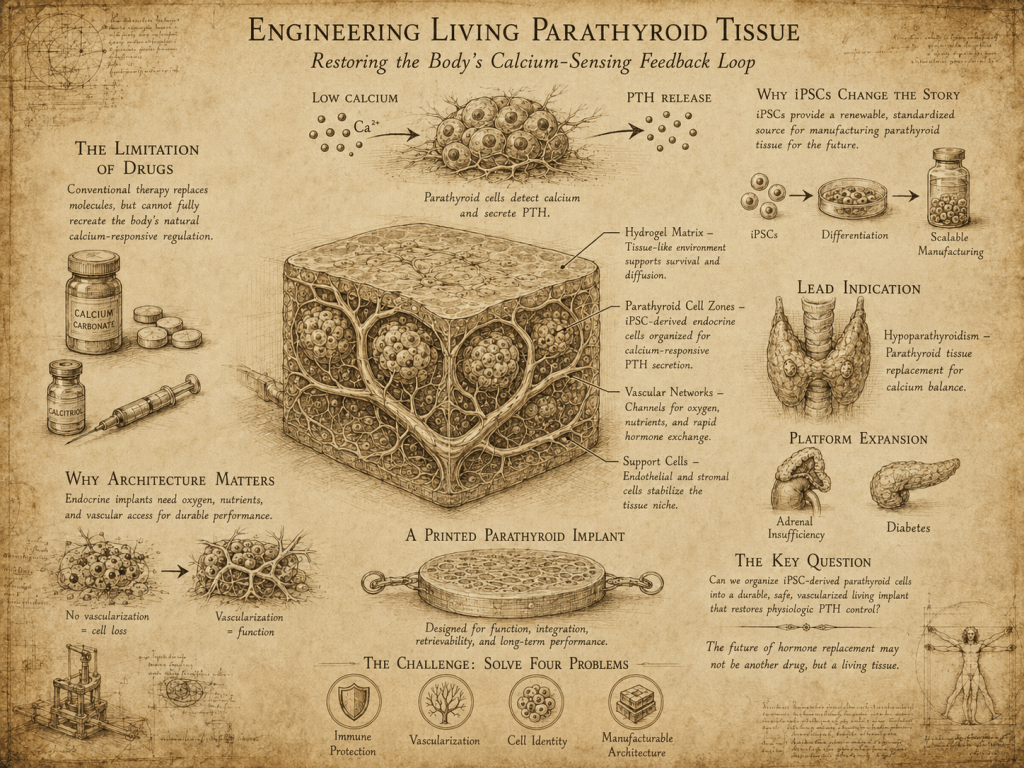
Why Hypoparathyroidism May Be the Best First Market for Biofabricated Endocrine Tissue Therapeutics
A small, retrievable, vascularized parathyroid micro-organ built from iPSC-derived endocrine cells could prove the broader biofabricated endocrine tissue thesis — restoring calcium-responsive PTH physiology rather than chronically dosing hormone replacement.
-

The Organ-on-Chip, Microphysiological Systems Landscape, NAMs: A Business Overview
The Organ-on-Chip, Microfluidics, and New Approach Methodologies space is no longer a niche academic pursuit — it is rapidly becoming a commercial force reshaping how drugs are discovered, toxicology is assessed, and disease is modelled. This article maps the emerging landscape across key segments.
-

NAMs, New Approach Methodologies for Drug Discovery: What It Means for the Future of Alternatives to Animal Testing and Biofabrication
A landmark review published in Cell by Stanford’s Joseph C. Wu and colleagues maps the rise of New Approach Methodologies, human-centric tools that are beginning to replace animal models in drug discovery, and what this shift means for organoids, bioprinting, and the broader biofabrication sector.
-
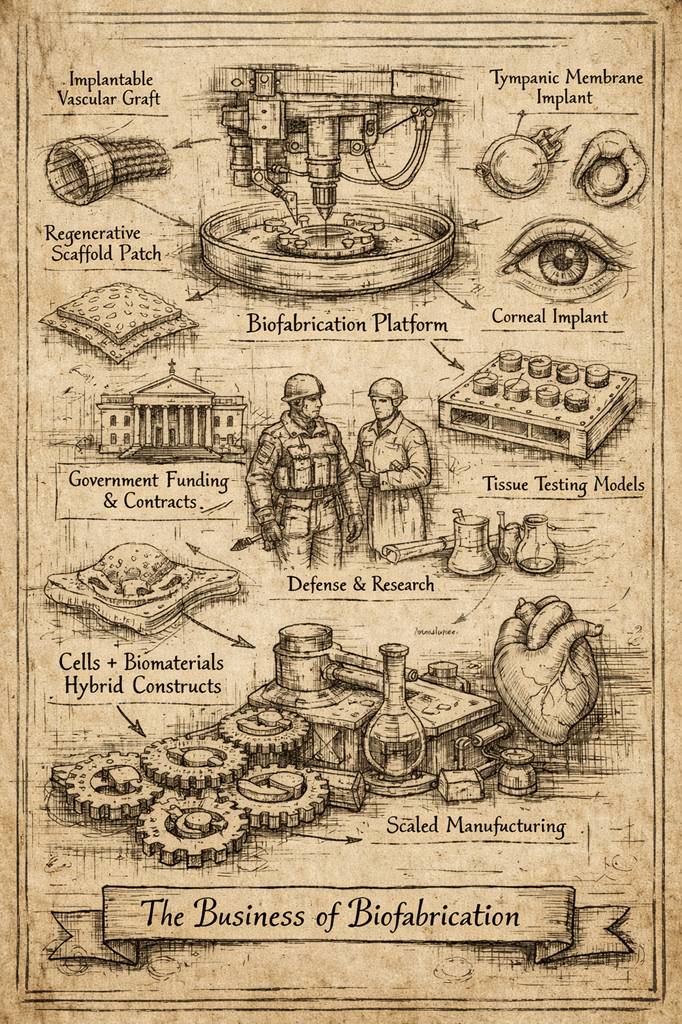
The Business of Biofabrication: What 2025 Taught Us
If the last decade of biofabrication was defined by technical possibility, 2025 was the year the business reality became unavoidable. Across funding announcements, platform launches, government contracts, and quiet shutdowns, one message became clear: biofabrication is no longer judged by what it can build, but by what it can sell, scale, and sustain. This year,…
-

The Race to Automate Cell Manufacturing
Why Cellular Manufacturing Matters Cell therapy has reached a defining moment. After two decades of breakthroughs in immunotherapy and regenerative medicine, the science has outpaced the infrastructure needed to deliver it. Each dose of a cell therapy—whether it’s a CAR-T for leukemia or an iPSC-derived tissue for Parkinson’s—requires the precise manipulation of living cells, often…
-

Using In Situ Bioprinting to Enhance Regenerative Cell Therapy
Regenerative cell therapy aims to repair or replace damaged tissues using living cells. However, traditional methods for delivering these therapeutic cells—like injecting them directly into a patient—often face challenges. Issues like cell survival, retention in the targeted area, and integration with existing tissues limit the effectiveness of these therapies. Biofabrication techniques are emerging to address…
-

Bioprinting Breast – enhancing or replacing the dominant silicone empire
A great place to a apply personalization from macro architecture is breast implants for women who have had to receive a mastectomy. Breast cancer is a growing challenge in the world as it is the most common cancer among women globally, with about 2.3 million new cases diagnosed in 2020, according to the World Health…
-

Bioprinting Ears – The pursuit to cure microtia
Intro The ear has probably been the symbol, the face, of tissue engineering and particularly bioprinting for many years. Consider the famous Vacanti ear back in 1996 that captured audiences around the world in both exciting and stomach wrenching ways. Atala then in 2016 followed with his own 3D bioprinted version that yet again captivated…
-

Bioprinting Bone – The race to control Hydroxyapatite and β-TCP
As we think about where bioprinting can truly start playing a role in implants, we naturally ask, “which tissue type will we first see become implanted?” While skin, might have been the choice we thought of about 15 years ago, as history as played out, bone is actually at the forefront of the industry. We…
Subscribe
Enter your email below to receive updates.

